In-Home Speech Therapy for Children in the South Bay
Blooming Language Learners
Speech Therapy Services & Play Clinic, Inc.
Blooming Language Learners Speech Therapy Services & Play Clinic, Inc. is passionate about supporting infants, toddlers, and young children, as well as their families, during the most important years of development. The intervention services and community-based classes offered provide engaging opportunities for children to build their early speech and language, sensory, motor, and play skills, as well as social-emotional development, through developmentally appropriate skill and play based activities. All services are led by a licensed speech-language pathologist and are designed for children ranging from infancy/early childhood/toddlers through elementary school-age (up to 12 years).
Blooming Language Learners provides in-home intervention services to South Bay families. We also offer customized infant, toddler, and pre-school aged private group language play events and experiences!
Parents play such an integral part in their child’s overall development and, therefore, Blooming Language Learners also offers parent trainings designed to empower caregivers with practical strategies to not only support language development, but to learn how meaningful interactions throughout everyday routines builds communication. Blooming Language Learners’ primary goal is to provide a welcoming experience where children can thrive, parents can feel confident, and families can build strong foundations for lifelong communication and learning.
Hi there!!! I am Erin Mance (aka Miss Erin :), founder and owner of Blooming Language Learners Speech Therapy Services & Play Clinic, Inc. I have been a certified speech-language pathologist for 25 years, the last 18 of those years spent here in the South Bay. I spent my first 11 years working in school districts providing services in special needs preschool programs, Head Start classrooms, and elementary schools (Kindergarten to 6th grade, including SDC programming). Prior to moving to the South Bay I lived in Phoenix and while working full time in a special-needs preschool, I worked a few hours per week at Phoenix Children’s Hospital, providing speech and language intervention for young children with more medically based needs. The last 14 years I have worked strictly in Early Intervention (EI) with little ones 18 months to 3 years of age.
I have always been fascinated and in awe of how the brain develops and works, especially in regard to communication development. I don’t just look at the activities we engage our children in as just “something to do”, but as something that is wiring the brain in that moment! I love teaching families how ALL modalities of learning help to build language/brain connections, especially pairing motor movements with language specific tasks. It is so enjoyable to see parent reactions when they start to see the connections being made! Over the years I have taken note of how mastery of “purposeful” movement is often greatly tied together with how a child builds their speech and language and so I implement movement into my therapy sessions for all ages. Sensory regulation is also a significant factor and, therefore, sensory activities are also incorporated into sessions as well, for those who need it!
Family involvement is greatly important to each child’s success and parent participation is part of my therapy services. I thrive on teaching families how they can begin to see EVERY moment as a speech and language opportunity, helping to take the pressure off of feeling like they have to “add” specialized moments into their already busy day. My motto has been: “If YOU aren’t having fun, then they aren’t having fun”……and what’s the fun in that?! : )
I look forward to working with you! ~Erin
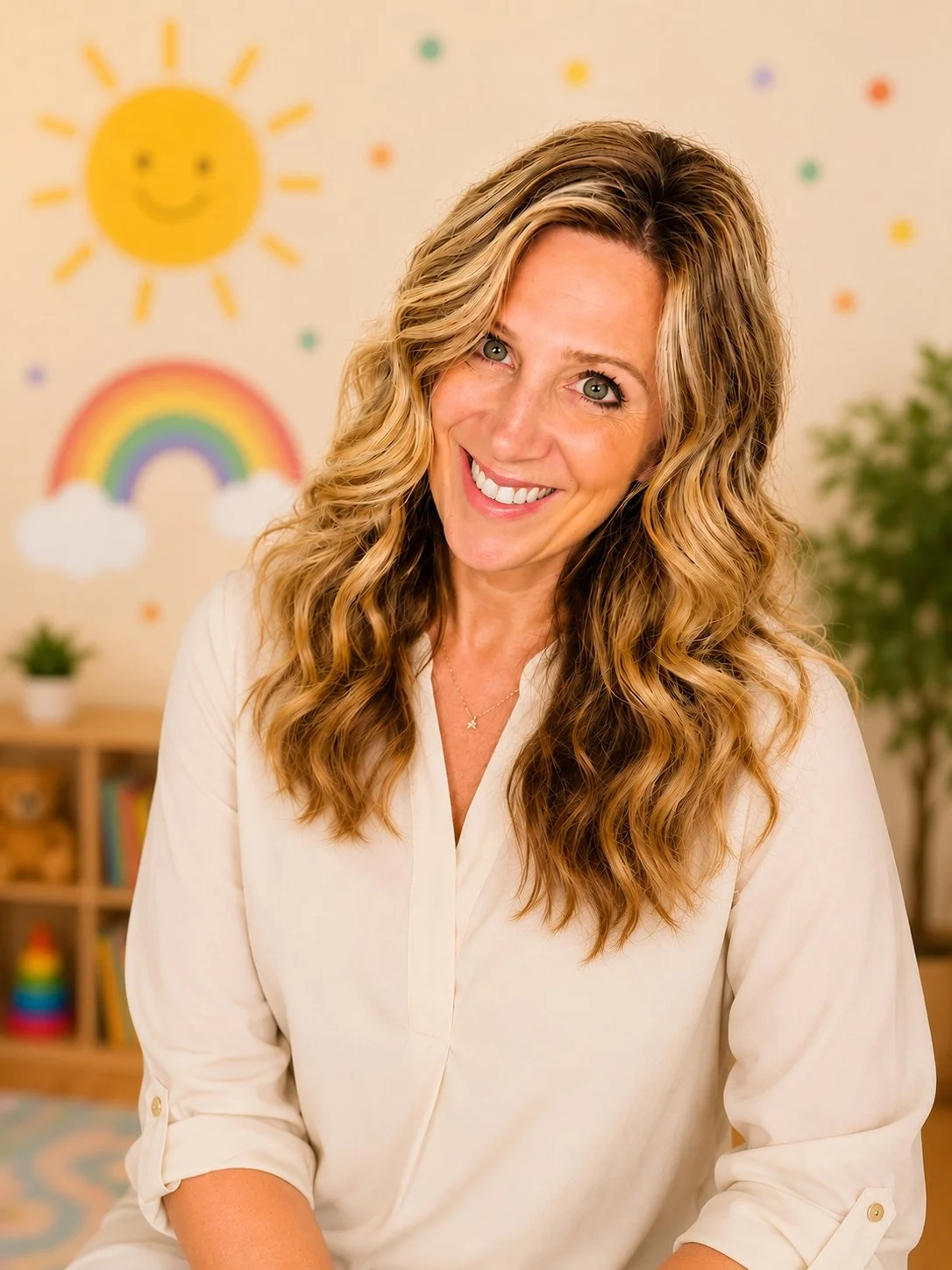
Meet Erin:
Credentials:
University of Nebraska at Omaha: Bachelor of Science in Education
University of Nebraska at Omaha: Master of Science in Communication Disorders
Certificate of Clinical Competence American Speech-Language Hearing Association (ASHA)
California Speech-Language Pathology License
California Teaching Credential: Speech-Language Pathology
Hanen It Takes Two to Talk (Certification)
USC Chan Sensory Integration Continuing Education (CE) Certificate Program (Certification)
Theoretical Foundations of Sensory Integration: From Theory to Identification
Sensory Integration Evaluation and Clinical Reasoning
Sensory Integration Treatment: From Intervention to Participation
Baby Babble Bootcamp (Certification)